

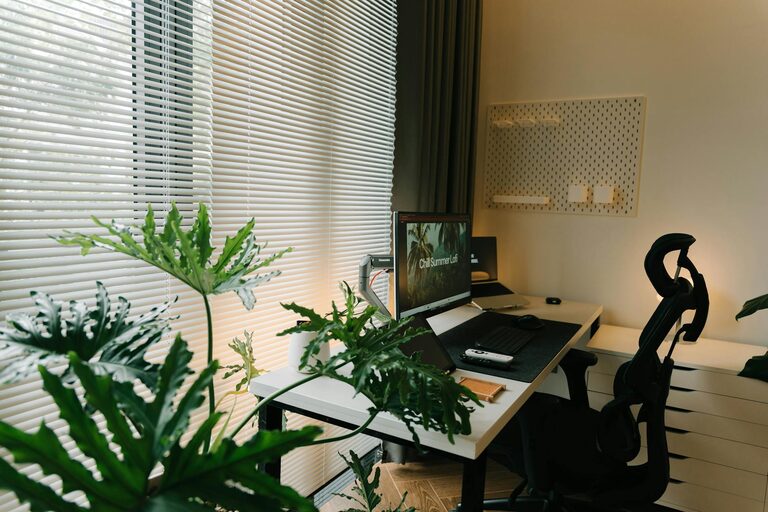
Creating a home office that is both relaxing and productive can significantly improve your work-from-home experience. Whether you’re a freelancer, a remote employee, or simply need a dedicated space for personal projects, your environment plays a crucial role in helping you stay focused and motivated.
In this post, we’ll explore practical ways to design and organise your home office to enhance comfort and efficiency.
Choose the Right Location
Selecting a suitable spot for your home office is the first step.
Consider Natural Light
Natural light boosts mood and alertness. Try to position your desk near a window to make the most of daylight. If natural light is limited, opt for bright but soft artificial lighting that mimics daylight.
Minimise Distractions
Choose a quiet area away from heavy foot traffic or noisy household activities. If space is tight, consider noise-cancelling headphones or white noise machines to keep distractions at bay.
Invest in Comfortable Furniture
Your furniture affects both your health and productivity.
Ergonomic Chair
An ergonomic chair supports your posture and reduces strain during long hours of work. Look for adjustable height, lumbar support, and comfortable padding.
Functional Desk
Select a desk with enough surface space for your computer, documents, and other essentials. Adjustable desks that allow you to switch between sitting and standing positions can also be beneficial.
Keep Organised with Clever Storage
A clutter-free workspace creates clarity and reduces stress.
Use Shelving and Drawers
Incorporate shelves and drawers to keep paperwork and supplies organised yet accessible.
Desk Organisers
Small organisers for pens, sticky notes, and cables help maintain a tidy work area.
Digital Organisation
Consider digital tools for managing your tasks and reducing paper clutter. Apps for scheduling, note-taking, and file storage can simplify your workflow.
Personalise Your Space Wisely
Adding personal touches makes your office feel inviting without causing distraction.
Choose Soothing Colours
Opt for calming colours like soft blues, greens, or neutrals to promote relaxation.
Add Plants
Indoor plants improve air quality and add a touch of nature, which can be calming.
Display Inspirational Items
Include a few meaningful items such as photos, artwork, or motivational quotes that encourage positivity without overwhelming the space.
Optimise Lighting and Atmosphere
Lighting and atmosphere directly influence how comfortable and alert you feel.
Layered Lighting
Combine ambient lighting (ceiling lights), task lighting (desk lamps), and accent lighting (decorative lamps) to create a balanced workspace.
Control Temperature and Air Quality
Ensure good ventilation and maintain a comfortable temperature. Use fans, heaters, or air purifiers as needed to create a pleasant environment.
Establish a Routine and Boundaries
Your workspace setup is important, but so is how you use it.
Set Working Hours
Define clear start and finish times to establish structure and avoid burnout.
Take Regular Breaks
Short breaks throughout the day help maintain focus and reduce fatigue.
Separate Work and Relaxation Zones
If possible, keep your home office separate from leisure areas to mentally switch between work and rest more easily.
Harness Technology Smartly
Technology can enhance your productivity but can also distract.
Use Reliable Equipment
Invest in a good-quality computer, monitor, keyboard, and mouse to reduce physical strain and technical issues.
Limit Notifications
Turn off non-essential notifications during work hours to minimise interruptions.
Utilise Productivity Tools
Explore apps and browser extensions that block distracting websites or help organise tasks.
Maintain Good Habits for Comfort and Wellness
Your comfort is tied to healthy habits.
Practice Good Posture
Sit with your feet flat on the floor, back straight, and screen at eye level.
Stay Hydrated and Nourished
Keep a water bottle nearby and plan healthy snacks to stay energised.
Incorporate Movement
Regular stretching or short walks help reduce stiffness and increase circulation.
—
By thoughtfully designing your home office with these tips, you can create a space that fosters both relaxation and productivity. Remember, a well-planned home workspace not only supports your work goals but also your overall wellbeing.